How CIPA changed everything; Wait, are you recording this?
Communication recordings without one’s consent is a hot topic today. The leaking of banned NBA team owner Donald Sterling’s conversation has undoubtedly further ignited the debate, causing individuals to question the real law. What limitations or guidelines are set in place to protect individual’s privacy rights during phone call communications? Is it sufficient to have one party consent to the recording or are both parties required to consent? These are just a few of the questions being pondered. Let’s take a brief look.
First up is the Californa Invasion of Privacy Act or in short, CIPA. While not first in order of precedence, its overreaching applications have caused it to become first priority for businesses determining their communications recording procedures and protocols. CIPA was enacted in 1967 to protect Californian’s right of privacy. The California legislature declared that “the development of new devices and techniques for the purpose of eavesdropping upon private communicates … has created a serious threat to the free exercise of personal liberties.” Thus, section 632 of CIPA was enacted to require all-party consent for recording confidential communications. Later CIPA was amended to add section 632.7. This section specifically prohibits the recording of any telephone call in which at least one of the recipients is using a cordless or cellular telephone. Note, that section 632 is limited to confidential communications while 632.7 is not – we will come back to this!
Next, there is the Federal Wiretap Act, which governs call recording under federal law. The Act permits the recording of calls, so long as at least one party consents. Approximately 37 states follow this same concept, rendering the taping of calls by a business and its customers ok, since at least one party involved (the business) gives consent. In stark contrast, twelve states and the District of Columbia mandate that all participants in the call must provide consent before it can be recorded.
My First Publication: Reading Aloud to Children and Its Impact on Literacy and Crime

Honored to have my first official publication. I wrote this article in January for the ABA Section of Litigation. I was notified this week that it was chosen for their Access to Justice, Spring 2014 Newsletter. Editor’s note – “If you should ever want to publish with us again, please let me know. Your work was great!” Truly humbled by the gesture and looking forward to continuing to write, as well as develop more complex pieces in the future.
Access to Justice
In March of 2010, the U.S. Department of Justice launched an Access to Justice Initiative (ATJ). The mission of the ATJ is to help the justice system efficiently deliver outcomes that are fair and accessible to all, irrespective of wealth and status. The ATJ is guided by three principles: “(1) Promoting Accessibility—eliminating barriers that prevent people from understanding and exercising their rights; (2) Ensuring Fairness—delivering fair and just outcomes for all parties, including those facing financial and other disadvantages; (3) Increasing Efficiency—delivering fair and just outcomes effectively, without waste or duplication.” It should also be noted that the ATJ also includes “collaboration between the DOL [Department of Labor] and the American Bar Association (ABA) to help workers resolve wage and hour complaints” under which “if the DOL can’t resolve a worker’s complaint because of limited capacity, the Department will furnish the complainant with a toll-free number which will connect them with a participating ABA-approved attorney referral provider in their area.”
Crime and Literacy
While the connection between crime and literacy may not be readily apparent, literacy does play a role in crime. According to the Bureau of Justice Statistics, up to ‘“70% of the incarcerated population is believed to be illiterate in some jurisdictions’ (1999). Many criminals end up in prison because they do not have the literacy skills, the proper education, or the life skills to make it in life the way law-abiding citizens do.” Literacy programs and other initiatives that aim to reduce crime minimize the need for access to justice.
The stressful lifestyle and hectic schedule of practicing lawyers are well documented. There is always more reading, research, or writing to complete, but no assignment can compare to the positive impact of reading to our children. Under constant pressure, we often lose sight of what is truly important, those small gestures that make a huge difference in other people’s lives. The purpose of our profession at heart, after all, is to help create a better living situation for everyone.
To read the article and its entirety see, Reading Aloud to Children and Its Impact on Literacy and Crime
Evans’ Safe Harbor Article One of 2014’s Best, Selected for Thomson Reuters Ent Law Anthology
Excellent article with great insight:
“Law and policymakers, OSPs, and other stakeholders must recognize the value of established user- expectation and customary and accepted practices. They also must formalize those beneficial uses that currently exist in the gaps and gray areas of copyright law and that cause little, if any, market harm. Good faith users deserve safe harbor protection in the digital age.”
Well said, and achievement very well deserved. Congrats!

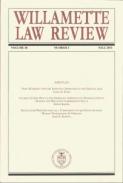 My law review article,
Safe Harbor for the Innocent Infringer in the Digital Age
, published recently by
Willamette Law Review
(50 Willamette L. Rev. 1 (2013)), has been judged one of the best law review articles related to entertainment, publishing and/or the arts published within the last year!
My law review article,
Safe Harbor for the Innocent Infringer in the Digital Age
, published recently by
Willamette Law Review
(50 Willamette L. Rev. 1 (2013)), has been judged one of the best law review articles related to entertainment, publishing and/or the arts published within the last year!
Accordingly, the editor of the 2014 edition of the Entertainment, Publishing and the Arts Handbook selected Safe Harbor for inclusion in the annual Handbook anthology published by Thomson Reuters (West).
[View & DL Safe Harbor for the Innocent Infringer in the Digital Age]
Warner Bros. sued for blockbuster film Gravity

Not long ago, the blockbuster film Gravity made headlines for winning seven awards at the 86th Academy Awards. Today, the awarded film is being headlined for different reasons…
Best-selling author Tess Gerritsen is suing Warner Bros. with the allegation that its blockbuster film, Gravity, is derived from her 1999 book by the same name.
The complaint filed in California federal court on Tuesday doesn’t allege copyright infringement. Instead, it’s a contract claim stemming from a film option she sold when the book was released. Gerritsen’s book is described as featuring “a female medical doctor/astronaut who is stranded alone aboard a space station after a series of disasters kill the rest of the crew.”
A company called Katja picked up film rights to herGravity book for $1 million. Additionally, she was promised that if a film “based on” her book was made, she would receive a $500,000 production bonus, screen credit and, maybe most importantly, 2.5 percent of defined net proceeds. Last year’s film — which won seven Oscars — grossed more than $700 million worldwide, putting potentially a lot at stake in the new lawsuit.
Dropbox 101 for Lawyers and Law Firms
Image Posted on Updated on

An attorney is only as valuable as the amount of information that they can readily access. With that said, there is not a day that goes by that I do not use Dropbox. It is an awesome tool that turns your mobile devices into electronic filing cabinets.
Dropbox is popular with lawyers. According to the ABA’s most-recent technology survey, 58% of lawyers use Dropbox, making it the most popular online file storage option among lawyers. Here is everything you need to know about Dropbox, from how to install it to securing your client files.
For more see, Dropbox for Lawyers and Law Firms: the User Guide
Never say Never: DE Chancery Court issues first arrest warrant
The Delaware Court of Chancery this week did something that, as far as anyone can tell, it has never done before. It issued an arrest warrant.
The unusual action by Vice Chancellor Donald Parsons Jr. came in a lawsuit filed by W. L. Gore and Associates against a former employee and research scientist – Huey Shen Wu of Newark – who the company claims is misappropriating Gore trade secrets and property.
Parsons issued the order calling for Wu’s arrest after weeks of warning him that he was in contempt of court and faced possible imprisonment if he did not comply with an order to surrender his U.S. passport, Taiwanese passport, Chinese visas and other Chinese travel documents.
Widener Law School professor Lawrence A. Hamermesh, who specializes in Chancery Court matters, said he was surprised by the move and did not realize the court had that power. “It is news to me,” he said.
Eliminate these terms from your legal writing
Link Posted on Updated on

Legalese (noun) – the formal and technical language of legal documents that is often hard to understand.
Since its inception, the use of peculiar legal terms has become a legal writing rights of passage. Are the terms effective? Yes. But, whether they are really needed is up for debate. Young attorneys often face this decision with uncertainty. Whether to replace the murky legal terms with clear language or stick with them in an effort to show that they too can write just as confusing is the question.
This article advocates for the deletion of “such” terms. The piece is extremely informative and persuasive, as Bryan Garner does an excellent job of thoroughly explaining the reasoning for his position. Listing numerous sources on the definition/use of each word and why it should be banned.
Keeping a banned-word list is hardly unique to newspapers. The novelist Ambrose Bierce kept a “Little Blacklist of Literary Faults,” published nearly a century ago. He despised committed suicide, preferring instead killed himself (or herself). He likewise disapproved of decease for die, executed for hanged (or put to death), expectorate for spit, inaugurate for begin, prior to for before and so on. He wasn’t fond of genteelisms. No real stylists are.
Legal drafters could benefit from a similar verbal blacklist—a simple list of words that do nothing but blemish the documents that contain them. Learn them and ax them.
and/or Is it a word? Is it a phrase? American and British courts have held that and/or is not part of the English language. The Illinois Appellate Court called it a “freakish fad” and an “accuracy-destroying symbol.” The New Mexico Supreme Court declared it a “meaningless symbol.” The Wisconsin Supreme Court denounced it as “that befuddling, nameless thing, that Janus-faced verbal monstrosity.” More recently, the Supreme Court of Kentucky called it a “much-condemned conjunctive-disjunctive crutch of sloppy thinkers.”
You have the right to remain silent, anything you Tweet can & will be used against you
“When the, streets is watching Blocks keep clocking Waiting for you to break, make your first mistake…” – Jay Z
Those infamous lyrics apply now, more than ever. Yet, the glaring social media acts of others continue to amaze. Twitter, Facebook, and Instagram (just to name a few), grant us an immediate connection with the world. Our own, readily available soapbox to project (type) our voice (words), for the world to hear (read). When used properly they are amazing tools; a means to share opinions on current events and personal experiences. But, it all comes at a great price – a gift and a curse, if you will.
As the old adage goes, “to whom much is given much is required.” Convenient access to social mediums eliminate the filtering process that would naturally occur when publicizing one’s feelings. It is thus important to not allow the relaxed forum to delude you. You are still responsible for your thoughts and actions, arguably to a higher degree once those thoughts are posted and available for anyone to derive or attach their own meaning.
Every week in the news, we are confronted with a controversial post made by someone on social media. Often, followed with regret and attempts to redact or delete; but unfortunately, once posted, the damage is already done. Recently, it was Richard Incognito of the Miami Dolphins who could not help himself.
Afterwards, water cooler conversations promptly begin questioning how the offender could be so reckless (my mother taught me to never call anyone dumb, so I will refrain). From the outside looking in, it is always a terrible idea, so why do we continue to see these same mistakes? The examples are endless, Teenager threatens to shoot up school on twitter arrested, drug dealers use Instagram to distribute. The story repeats itself so often that I have concluded it can happen to anyone. I am convinced a social media troll exist, hijacking minds, perusing accounts, and wrecking havoc… No, but seriously, these transgressions have to be addressed.
Going one step further, an individual’s social media profile is often where civil and criminal investigations begin today. These accounts possess an abundance of information; one’s interests, whereabouts, inner-thoughts, perspective, and future plans. Tools such as BrightPlanet’s, BlueJay Law Enforcement Twitter Crime Scanner allow police departments to conduct pre-crime searches on Twitter. Invasive? Maybe, but the rationale is the fact that it helps to prevent future acts of crime. Yes, our very own “Minority Report.” A very slippery slope indeed, but only the future knows where it will lead us.
As an attorney it is imperative that you not only represent yourself well on social networks, but also educate your client. Many individuals consider their account to be secure simply because they mark it private, requiring others to request to view their profile for access first. While this may be quite true, do you know every follower that you accept? Are you sure that long time friend that you accepted is really him or her?
For now, If you are an active ‘social networker’ it is important to take your post seriously. Expect the world to have access to your post, forever! Consequently, post only those things that you are comfortable with anyone seeing. Taking into consideration that your feelings about any given topic may not always be as flagrant as they are now. The post or tweet should be something that with reasonable deference you are OK with 20 years from now. After all, how are you going to feel when your child accuses you of hypocrisy and presents you with your own tweet, after you tell him or her that they cannot do something that, “you tweeted?” 😦
Update:
Not long after completing this piece, I discovered that the Delaware Supreme Court recently ruled on the admissibility of Facebook and social-media evidence. This article written by Molly DiBianca, highlights the importance of social media-evidence and its evolution. See, Delaware Supreme Court Rules On Admissibility of Facebook Evidence
The Semicolon
Infelicitous is the word I would use to describe my relationship with the semicolon over the years; quite simply, its been complicated. I love its style, look, and bravado, but it seldom reciprocates the feeling. If you can relate, check out the article attached below…
In college, whenever I used a semicolon in a paper, it came back to me with a big red circle around the offending member. I thought semicolons were just inflated commas, and I realized that I had no idea how to use them, and was afraid it was too late to learn, so I decided to do without them. I stuck with what I knew: the common comma, the ignorant question mark, the occasional colon, the proletarian period.
And for a bonus see, Why semicolons are the perfect punctuation for the digital age
‘Dumb Starbucks’ parody shuts down but debate over trademark law & parody continues
I followed this story as it developed over the past week – the author here did a great job summarizing the events thus far.
Here is my response (see original article below):
On the discussion of who has the stronger argument, it gets interesting. First there is the First Amendment and parody vs trademark law. Followed by, dilution by blurring or tarnishment.
The trademark protection argument is weak because it hinges upon the “the likelihood” of consumer confusion. I find it difficult to believe that anyone here is confused. The parody literally attached the word “dumb” to Starbucks name. No one would reasonably believe the two stores are related.
Fielder also has a decent argument against dilution by blurring and tarnishment with §1125(c)(3) of the Lanham Act. In short, the section specifically permits for the parodying of the goods or services of a mark owner. While it protects against injury to the good will and reputation of the mark, here I do not believe Starbucks has suffered much harm. It was fairly clear the act was a prank; it was funny, and the coffee was free!
Over time, if the parody were to remain open (or expand), and a correlation was made with a decline in the public’s perception of Starbucks, then perhaps, an argument may be made for the good will and reputation of Starbucks’ mark. Otherwise, I think it may be considered fair game.
Either way, it will be exciting to see what comes next in this ‘kerfuffle’!
 On February 9th, The Huff Post and other media outlets reported the grand opening of a store in the Los Feliz neighborhood of Los Angeles, “Dumb Starbucks”. The clever prankish parody even caught the attention of Forbes:
‘Although it looks like Starbucks, smells like Starbucks and even acts like Starbucks (the super-friendly baristas asking for your name were hired off Craigslist), the whole thing is an elaborate goof on Starbucks culture. A list of Frequently Asked Questions posted on premises compared the place to Weird Al Yankovic’s homage to Michael Jackson’s “Beat It.” Dumb Starbucks, you see, is the “Eat It” of $6 coffee drinks.’ Source: Forbes.com
Amazingly, people stood in line for hours for the Dumb Starbucks java, which reportedly was whatever the local grocery store had on hand for the few days Dumb Starbucks remained open. The locals and media alike seemed to get…
View original post 506 more words
 The Burgeoning Young Attorney